Product successfully added to your shopping cart
Subtotal of your cart (1 item)
(tax excl.)
:
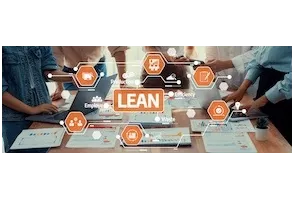
The Lean and Lean Six Sigma trainings are part of the same continuous improvement approach, aiming to optimize processes, enhance quality, and sustainably increase the performance of organizations.
👇Discover the characteristics and differences between Lean and Lean Six Sigma trainings in the description below.
Lean Six Sigma Yellow Belt ⎹ 2-day training with certification
6-day Training ⎹ Pre- and post-training work ⎹ Included certification
Duration: approx. 60 hours study time/ 365-day access / IASSC® exam voucher included
Duration: approx. 45 hours study time/ 365-day access / IASSC® exam voucher included
Duration: 36 hours study time/ 6-month access / exam voucher ILSSI included
Duration: 80 hours / 6 months access / ILSSI exam voucher included
Duration: 98 hours study time/ 6-month access / ILSSI exam voucher included
120 minutes / multiple choice exam
180 minutes / multiple choice exam
240 minutes / multiple choice exam
The Lean method focuses on creating value for the customer, optimizing flows, and eliminating waste. Based on a field approach (Gemba), this pragmatic method allows quick achievement of concrete results by improving the speed, fluidity, and efficiency of operational processes.
The Lean Six Sigma extends this approach by providing a more structured and analytical method for solving complex and recurring problems. It combines the principles of Lean with the rigor of Six Sigma, a problem-solving methodology based on data and the DMAIC process, in order to permanently reduce defects and process variability.
These trainings are organized into progressive pathways, allowing each person to progress according to their role, level of maturity, and objectives: from discovering and applying the fundamentals of Lean, to leading high-impact improvement projects through Lean Six Sigma Green Belt and Black Belt certifications.
Whether you want to quickly improve your processes or structure a long-term operational excellence approach, Lean & Lean Six Sigma trainings offer you concrete tools, a proven methodology, and recognized certifications, directly applicable in your professional context.
Optimize process performance, sustainably and concretely
Lean training aims to improve the speed, quality and efficiency of processes, while eliminating waste that hinders value creation. Based on a field approach (Gemba), the Lean method relies on observing real processes and using practical tools, immediately applicable.
Our Lean training focuses on action and concrete results. You learn principles and tools that you can use the next day, in order to quickly generate tangible and measurable improvements in your professional environment.
Our Lean pathway is structured in three complementary levels, allowing each person to progress according to their objectives and role in the organization:
These training courses are aimed at professionals who want to go from theory to practice, and make Lean a real lever of operational performance.
The Lean Six Sigma training courses are aimed at organizations and professionals who wish to go beyond flow optimization and address complex, recurring or high impact process issues.
Lean Six Sigma combines the philosophy of Lean — focused on creating value and eliminating waste — with the rigor of Six Sigma, a problem-solving methodology based on data analysis and the structured DMAIC (Define, Measure, Analyze, Improve, Control) process. This approach allows for sustainable reduction of defects, variability, and root causes of malfunctions.
The Lean Six Sigma training courses are organized in progressive levels, each corresponding to a specific role in the improvement process:
These trainings are strongly project and result oriented, with a direct application in the professional environment of the participants. They constitute a powerful lever to structure an operational excellence approach, improve the quality of processes and strengthen customer satisfaction in a sustainable way.

BlogPost
The new ITIL® (Version 5): clearer guidance for digital products and services
Exciting News for Project Managers, Programme Managers, Business Analysts, Sponsors and all individuals involved in organizational change!
What Makes PRINCE2 Agile v2 Different 𑗅 Key Benefits for Organisations and Professionals 𑗅 PRINCE2 Agile vs. PRINCE2 and other Agile Methodologies


B2B Learning | Company N° : BE0475396208 | Legal Notice & Contact | General Conditions | Cookies | Personal data
© Copyright 2026 - E-net Business, creator of e-commerce websites for businesses, self-employed, & SMB.
Product successfully added to your shopping cart